Only when there remains only the noise of the bombs like .Then melody, that is that the music it will be concealed for the mankind.
DJ DemonAngel (23/01/2008)
Monocyte is the second CD from Saltillo, the trip-hop electronic meets violin and cello project from Chicago-based artist menton3. The CD is the follow up to the critically aclaimed and super successful Ganglion, which was released in 2006 and re-issued by Artoffact Records in 2011. Monocyte is a concept album, a soundtrack to the comic book of the same name, published by IDW Publishing. The CD is raw, dark, and difficult, presenting a vision of the Monocyte brand that builds on the comic's energy. RIYL Portishead, DJ Shadow, and Massive Attack.
Le Peuple de l’Herbe est un groupe originaire de Lyon, en France. Créé en 1997, le groupe s’est fait un nom sur la scène musicale européenne grâce aux cinq albums proposés depuis les débuts du Peuple. Le 16 janvier 2011 sortira un tout nouvel album : « A matter of time », fraîchement enregistré dans leur propre studio. En avant première, le Bourlingueur du net l’a écouté pour vous.
Démarrage en fanfare avec « New Day », exposant la philosophie enthousiaste du Peuple : ça groove et c’est dansant, parfaite introduction ! Par la suite, le mouvement ne s’éteint pas mais on ne crie pas au génie. Le Peuple de l’Herbe passe en revue différents genres musicaux tels que le funk (Motership, Let us Play,…), l’électro (avec Wooden Jam, très typé oriental, ou Numbers, plutôt orienté son 80’s), ou encore le hip hop français, et c’est une première pour le Peuple de l’Herbe (avec Parler le Fracas, en collaboration avec Marc Nammour, chanteur de La Canaille). La fin de l’opus est plus percutante avec le titre « A Matter of Time » (chanson qui a donné son nom à l’album), poésie orale intimiste, personnelle, profonde, émotionnelle… L’album finit comme il avait commencé avec le titre « 19… » Au rythme des cuivres et de la batterie, on devine encore la philosophie musicale du groupe, enthousiaste et dynamique.
Malgré des chansons plutôt bien foutues, difficile de voir clair dans cet opus qui sera bientôt dans les bacs, mais là est peut-être la marque du groupe qui existe depuis presque 15 ans. Les plus sceptiques d’entre nous auront peut-être du mal à trouver un quelconque intérêt dans « A matter of time ». Ils ne se retrouveront sans doute pas dans cette ambiance métissée, dans ce perpétuel voyage musical qui traverse différents styles. Par contre, pour tous ceux qui ne craignent ni les nouvelles expériences, ni les aventures musicales, cet album pourrait vous toucher. Enfin, pour les habitués du Peuple de l’Herbe (sur ce point, je pourrais me tromper n’étant moi-même un habitué), « A matter of time » ne devrait pas décevoir. Un album mature (le sixième des lyonnais, il faut le souligner), dans la lignée du Peuple de l’Herbe sans pour autant être répétitif.
La Cherga has always understood itself to be an open collective. The many features on "Revolve" provide proof of this.
La Cherga was looking for an MC for the track "Make a change". They found what they were looking for in their current home town of Graz. The upcoming Austrian reggae band Millions of Dreads both lives and plays there. The MoD MC I-Razor, a Slovene living in Austria, dropped into the studio, leaving a classic reggae toasting behind.
Dubioza Kolektiv, probably the best-known crossover band from the Balkans, were so impressed by the track "One" that they didn't need asking twice and immediately recorded a statement on the state of the nation and the world in general in the studio in Sarajevo. MC Killo Killo is featured on the album at the specific request of the band. In the track "Votka dot com" he gets to the heart of the feelings of the expatriate diaspora.
On "Rise Up", Sandy Lopicic - a long time companion of La Cherga producer Nevenko Bucan - does the honours. Although still known to quite a few people as the frontman of the Sandy Lopicic Orkestar, today he is a director and composer at Graz Theatre.
Overall "Revolve" has developed into an album which highlights the multifaceted La Cherga sound. Great emphasis was placed on classic songwriting for this recording. The brief stopover in Sarajevo, where the final touches were put to the album, is also unmistakable. It also features tracks which represent the special "Bosnian vibe" such as "Sufi Dub", "VI", "Afgan" or the first single "Melaha".
Nevenko Bucan
"Right from the beginning La Cherga set their priority on the alternative pop sector. It was always a balancing act between traditional roots elements, contemporary electronic, rock'n'roll, dub, jazz and pop influences. The important thing is that everything works together as an organic unit. We believe that we have been very successful so far. That is why we also in the meantime call our sound La Cherga Dub or LCH DUB for short."
Adisa Zvekic
"LA CHERGA have the power which makes it worthwhile to concentrate all your energy and place it into this sound. "Revolve" is the result."
An intriguing mixture of the ancient and contemporary, with every track different.
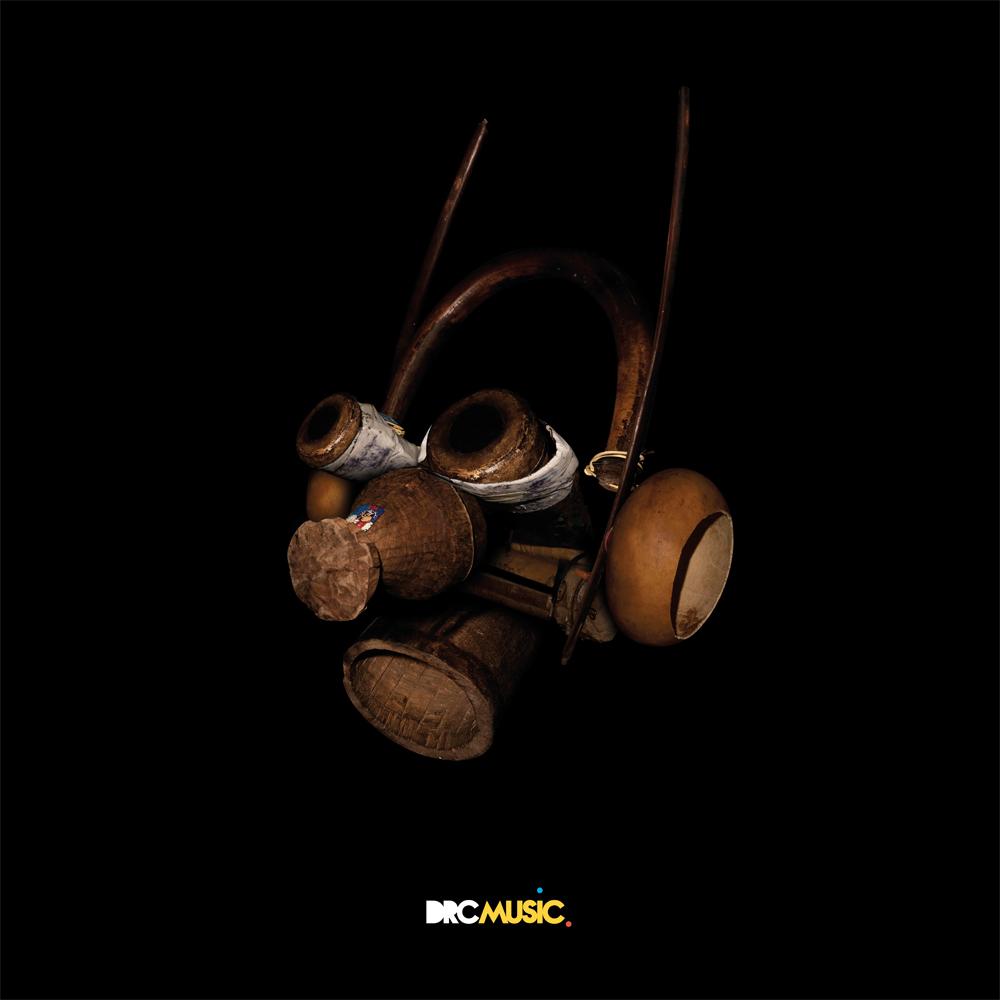
Kinshasa is a vast, sprawling and chaotic city with a glorious musical tradition. The capital of the Democratic Republic of Congo may have suffered from war and dictatorship, with the result that many live in poverty, eking out a living on the streets; but there’s also an energy and a wild optimism that is reflected in the sounds that can be heard across the city. Kinshasa was home to Franco, Africa’s greatest guitar hero, and is now famed for that rousing and remarkable disabled band, Staff Benda Bilili.
It’s only natural that the city would attract adventurous African music fan Damon Albarn, who arrived four years ago to work alongside local musicians with the Africa Express movement. His return to Kinshasa this summer was rather different. Accompanied by a collective of 10 producers, making up the DRC Music project, he spent five days in the city, recording this album as a benefit set for Oxfam.
Those involved include the French-African music specialist Marc Antoine; XL Recordings co-founder Richard Russell, who worked with the late Gil Scott-Heron; London-based producer Kwes; and hip hop producer Dan the Automator. They went about the sessions in a highly unusual way: instead of recording separately, they all worked together in the same place, as a commune, with most of the sessions held at a studio inside the French Cultural Institute. The French filmmakers Renault Barret and Florent de la Tullaye, responsible for the remarkable documentary about Staff Benda Bilili, also became involved – they explained what was going on to different Kinshasa musicians, and invited them along to the Institute. Says Albarn, "I realised that I was witnessing and being part of a whole new way of making music."
The resulting album is an intriguing mixture of the ancient and contemporary, with every track sounding different: electronica mixes with traditional African styles, reggae with funk and more. It starts with the most commercial and Western-sounding song, Hallo, which features Albarn and Kinshasa singer Nelly Liyemge on a cool, melodic piece that begins with echoing keyboard lines before a subtle blend of beats and wailing chanting are added. Then comes a blend of Congolese rumba, cha-cha, rock and hip hop on K-Town, featuring N’Gotshima and Bebson; and later, soulful vocals from Yende Bongongo grace the sturdy, gently driving Lourds.
Other highlights include pieces from Bokatola System, who use anything from thumb piano and whistles to clattering percussion. On the remarkable Ah Congo, they start with what sounds like a church service conducted to the sound of electronic beats, and are then joined by the edgy, growled, half-spoken vocals of Jupiter Bokondji, with a wash of effects added atop everything. Overall, this is an album that’s well worth checking out, especially as the proceeds go to help Oxfam’s work in DRC.
Tracklist :
1. Hallo featuring Tout Puissant Mukalo and Nelly Liyemge - listen now above
2. K-Town featuring N’Gotshima and Bebson
3. African Space Anthem (A.S.A) featuring Ewing Sima of Tout Puissant Mukalo
4. Love featuring Love
5. Lingala featuring Bokatola System and Evala Litongo - listen now above
6. Lourds featuring Yende Bongongo of Okwess International
7. Respect Of The Rules featuring Loi X Liberal
8. We Come From The Forest featuring Bokatola System
9. Customs featuring Bokatola System
10. Virginia featuring Magakala Virginia Yollande and Yowa Hollande
11. Ah Congo featuring Jupiter Bokondji and Bokatola System - listen now above
Simon Green was born and grew up in rural Hampshire, escaping to Brighton aged eighteen. There he fell into the jazz/hip hop/funk/soul scene centred around Rob Luis and nights like phonic:hoop. An accomplished musician as a teenager, he began producing his own tracks, pushing at the template established in the sweaty little venues studding the Lanes.
Green’s first release came on Luis’ label, Tru Thoughts, when his track 'Terrapin' was included on the compilation 'When Shapes Join Together' in 1999. His debut album, 'Animal Magic' followed the next year, completely self-produced and largely self-played, too. Hailed as one of the “new downtempo pioneers”, Green found himself attracting the attention of other labels and eventually signed to Ninja Tune.
In 2003 he released his first album for the label, 'Dial ‘M’ For Monkey'. This was a time when Green was also focussing heavily on his DJing, playing banging dancefloor sets of hip hop, funk and drum & bass up and down the country and across Europe, a period which reached its apogee with the release of the mix album 'Solid Steel: It Came From The Sea'.
'Days To Come' followed in 2006, Green opting for a lusher, more live sound than on his earlier records. To tie in with this musical development, he put together and rehearsed a live band that could bring the music of his records to life. As a result he has moved from selling out the Luminaire to selling out Koko to selling out Kentish Town Forum and the Roundhouse and producing the live DVD to prove it. 'Days To Come' also scooped the Gilles Peterson listnerer’s poll for Album of The Year. At the award ceremonies he met the talented UK soul singer Andreya Triana. Not only did the friendship they struck up result in Andreya’s superb contributions to 'Black Sands' but Si has produced the whole of her solo debut, 'Lost Where I Belong'.
Over the last couple of years, Bonobo has become one of the premier artists on the Ninja Tune imprint and certainly one of the most listened to, with over 16 million plays recorded on LastFM. His combination of superb live shows and studio wizardry means that he is now perfectly placed to push on into a yet bigger league. With 'Black Sands', Bonobo has made the record to achieve it.
Kansas City’s Monta At Odds, brothers Dedric and Delaney Moore, display their passion for dub, abstract funk and postrock then roll it up into an atmospheric trip. Tracks wind and blend into the next seamlessly without the soundscape ever getting predictable. The album hinges on collected ambiance and voice sounds recorded during Delaney’s travels through a variety of Eastern European and Asian countries -these sounds all help keep things deep and emotional from beginning to end. A sublime journey guaranteed to transport.
This special release also includes 4 remixes of ‘Disappointment’ by: Carter Monroe, Rogg Agent, Solus and DF Tram and the track ‘On The Fly’ an outtake from the original album recording sessions.
The music of "Unsuspecting" is often dark, always moody and perfect for a long, quiet drive, or a slow night in. While Monta At Odds draw from inspirations of jazz, and dub, their sound is an entirely unique combination of brushed snares, jazz horns, drifting string pads, abstract, dubby vibes, melancholy guitar and piano, with sparse and always distorted vocals. This album is more for closing your eyes and drifting away than nodding your head or moving your feet, and if you can make any level of emotional connection the first time you hear it, "Unsuspecting" is guaranteed to grow on you like a vine.
Volker Bertelmann devait trouver son nom trop difficile à retenir, du coup il a choisi le pseudo Hauschka. Pas con. En 2007 je tombe un peu par hasard sur Room to expand et je suis sous le charme de ce compositeur made in Dusseldorf qui torture son piano.
En 2011, Volker s’entoure (de deux Calexico et un Mum) et sort son album le plus abouti. Et par là je veux dire que c’est mon avis que j’exprime. Car c’est de l’un des albums de l’année dont on parle là. Si le piano est toujours au centre des débats, c’est une multitude de trouvailles mélodiques géniales qui garnit ce Salon des amateurs.
Sur un disque moins expérimental, et presque dansant, Hauschka évite la répétition que sa formule pouvait laisser présager... le piano a ses limites.
Volker Bertelmann devait trouver son nom trop difficile à retenir, du coup il a choisi le pseudo Hauschka. Pas con. En 2007 je tombe un peu par hasard sur Room to expand et je suis sous le charme de ce compositeur made in Dusseldorf qui torture son piano.
En 2011, Volker s’entoure (de deux Calexico et un Mum) et sort son album le plus abouti. Et par là je veux dire que c’est mon avis que j’exprime. Car c’est de l’un des albums de l’année dont on parle là. Si le piano est toujours au centre des débats, c’est une multitude de trouvailles mélodiques géniales qui garnit ce Salon des amateurs.
Sur un disque moins expérimental, et presque dansant, Hauschka évite la répétition que sa formule pouvait laisser présager... le piano a ses limites.
The partnership between German electronic musician Burnt Friedman and legendary Can drummer Jaki Liebezeit, established almost ten years ago, is back in action once more, following the 5 7 EP released last year. This fourth instalment in the Secret Rhythms series continues on a similar path to its predecessors by bringing together rich rhythmic tones and rarefied electronic formations. More than ever centered around Liebezeit’s hypnotic drumming, Secret Rhythms 4 sees the pair move into more minimal, stripped down terrains, the rhythmic patterns forever more cyclical, repetitive and fluid, layered with fragments of electronics and guitars, themselves set into loops of varying intensity and length.
Four of the six tracks here go over the ten minute mark, with 182-11 clocking at just under sixteen minutes. This leaves the pair plenty of time to set their rhythmic structures in motion and work on the trance-like aspect of the groove of each track until it starts distorting the perception of its very nature. So bare is the surrounding soundscapes created by Friedman around Liebezeit’s overwhelming rhythms that, as tracks progress, it becomes difficult to identify with precision at which exact point one is. For the most of 128-05 for instance, the scope is divided between Liebezeit’s alternating set of toms and bass drums and a recurring electronic two-tone bass which appears so tightly stuck to the drum patterns that it blends in almost entirely in the background. Later, the bass is taken up a couple of octaves as Friedman progressively introduces sweeping textures, but this barely affects the hypnotic nature of the piece.
Before it, 204-07 shows a richer sonic space around the core rhythmic structure, although Friedman seems to remain slightly towards the back here, leaving long term collaborator Joseph Suchy, a member of his Nu Dub Players, on E-Fuzz guitar to occupy the fore. Equally, 182-11 is a much more elaborate and complex piece, which grows over its all course from sparse drum inputs placed over hazy soundscapes to much drier forms later on as treated guitars are introduced, while 120-05 later is once again criss-crossed with E-Fuzz guitar fragments, this time supplied by Tim Motzer, giving it a more abrasive feel as the pace picks up.
On the two short tracks, 131-07 and 120-11, the sonic scope is considerably concentrated, which induces an element of urgency other absent of this record. The hectic pace of the former contrasts with the more subtle progressive tempo of previous pieces, while the latter provides Friedman with the opportunity to develop miniature melodic forms and let them roam free for a moments before they are ultimately brought back under the implacable control of Liebezeit’s percussions.
It appears that the further Burnt Friedman and Jaki Liebezeit develop their collaboration the more fascinating it gets. Secret Rhythms 4 is a less immediate record than its predecessors, perhaps due to its barer overall aspect, yet the pair have reached here another level of development here, their understanding and respect of each other’s space allowing them both to perform as equal whilst occupying very different roles, ultimately making this record their more compelling release yet.
Tracklist :
01 204-07 (10:44)
02 128-05 (10:21) mix by Mark Ernestus
03 182-11 (15:40)
04 131-07 (05:33)
05 120-11 (04:17)
06 120-05 (10:20) mix by Rashad Becker and Burnt Friedman
The partnership between German electronic musician Burnt Friedman and legendary Can drummer Jaki Liebezeit, established almost ten years ago, is back in action once more, following the 5 7 EP released last year. This fourth instalment in the Secret Rhythms series continues on a similar path to its predecessors by bringing together rich rhythmic tones and rarefied electronic formations. More than ever centered around Liebezeit’s hypnotic drumming, Secret Rhythms 4 sees the pair move into more minimal, stripped down terrains, the rhythmic patterns forever more cyclical, repetitive and fluid, layered with fragments of electronics and guitars, themselves set into loops of varying intensity and length.
Four of the six tracks here go over the ten minute mark, with 182-11 clocking at just under sixteen minutes. This leaves the pair plenty of time to set their rhythmic structures in motion and work on the trance-like aspect of the groove of each track until it starts distorting the perception of its very nature. So bare is the surrounding soundscapes created by Friedman around Liebezeit’s overwhelming rhythms that, as tracks progress, it becomes difficult to identify with precision at which exact point one is. For the most of 128-05 for instance, the scope is divided between Liebezeit’s alternating set of toms and bass drums and a recurring electronic two-tone bass which appears so tightly stuck to the drum patterns that it blends in almost entirely in the background. Later, the bass is taken up a couple of octaves as Friedman progressively introduces sweeping textures, but this barely affects the hypnotic nature of the piece.
Before it, 204-07 shows a richer sonic space around the core rhythmic structure, although Friedman seems to remain slightly towards the back here, leaving long term collaborator Joseph Suchy, a member of his Nu Dub Players, on E-Fuzz guitar to occupy the fore. Equally, 182-11 is a much more elaborate and complex piece, which grows over its all course from sparse drum inputs placed over hazy soundscapes to much drier forms later on as treated guitars are introduced, while 120-05 later is once again criss-crossed with E-Fuzz guitar fragments, this time supplied by Tim Motzer, giving it a more abrasive feel as the pace picks up.
On the two short tracks, 131-07 and 120-11, the sonic scope is considerably concentrated, which induces an element of urgency other absent of this record. The hectic pace of the former contrasts with the more subtle progressive tempo of previous pieces, while the latter provides Friedman with the opportunity to develop miniature melodic forms and let them roam free for a moments before they are ultimately brought back under the implacable control of Liebezeit’s percussions.
It appears that the further Burnt Friedman and Jaki Liebezeit develop their collaboration the more fascinating it gets. Secret Rhythms 4 is a less immediate record than its predecessors, perhaps due to its barer overall aspect, yet the pair have reached here another level of development here, their understanding and respect of each other’s space allowing them both to perform as equal whilst occupying very different roles, ultimately making this record their more compelling release yet.
Tracklist :
01 204-07 (10:44)
02 128-05 (10:21) mix by Mark Ernestus
03 182-11 (15:40)
04 131-07 (05:33)
05 120-11 (04:17)
06 120-05 (10:20) mix by Rashad Becker and Burnt Friedman